Quality
Lymph Flow testing and quality
Ten marks were supplied with this product. Not one of them is printed on the bottle, not one names a certifying body or carries a registration number, and every one of the ten is the same image file as a mark supplied with three other, unrelated brands. This page shows eight of them and explains the two it does not.
Ten marks were supplied. None appears on the bottle artwork. Eight are shown below with what each one is and is not a claim about. Two are withheld: a “made in USA” roundel that reads “MANUFACTURE IN” twice around its ring and never finishes the phrase, and a “Doctor Formulated” badge naming no doctor. All ten are pixel-for-pixel matches for files supplied with other brands.
The eight marks shown
Ten marks were supplied alongside this product. Not one of them is printed on the bottle artwork itself, none names a certifying body or carries a registration number, and every one of them is a pixel-for-pixel match for a file supplied with three other, unrelated brands.


Read the captions rather than the pictures. Several are claims about a factory, one about sourcing, one is an adjective with no agreed definition, and three cannot be checked at all without an Other Ingredients line.
What each one is a claim about
A mark is worth what its evidence is worth. Here is what each of the eight would need behind it, and what was supplied.
| Mark | A claim about | What would substantiate it | Supplied? |
|---|---|---|---|
| Money-back | A commercial term | Published terms: a window, an address, a procedure | Yes — the only one of the ten with real terms behind it |
| GMP certified | The factory’s procedures | A named certifying body and a certificate number | No |
| FDA registered facility | An administrative listing | A registration number, and the name of the facility | No |
| GMO free | Sourcing | A verification scheme, or a testing statement | No |
| 100% natural | Nothing defined | There is no agreed definition in US supplement labelling | No |
| Vegetarian | The excipients | An Other Ingredients line to check | No — there is none |
| Dairy free | The excipients and allergens | An allergen statement | No — there is none |
| Naturally gluten free | The ingredients | A test statement against the FDA’s 20 ppm threshold | No |
One row in eight has evidence behind it, and it is a commercial term rather than a quality finding. The guarantee page covers the money-back roundel in detail.
The method, so you can repeat it
The finding about these marks is a measurement rather than an impression, so here is the measurement, in enough detail that anybody with the same files can check it.
Collect the image files
Every mark supplied with this product, and every mark supplied with the other products received in the same run, each under its own filename.
Downsample each to 64×64 pixels
Which removes differences of compression, resizing and file format, and leaves the image itself.
Measure the mean absolute difference per colour channel
Between each pair. A difference of 0.00 means the two files are the same image.
Read the result
Ten of ten matched Lungora, a lung supplement. Ten of ten matched Slim Metrix, a weight-loss supplement. Nine of ten matched Zencortex, an ear-health supplement. The payment-card strip matched too. The mean difference on every one of those matches was 0.00.
Four brands, four health categories, one badge set. That is not an accusation of wrongdoing: stock trust marks are sold in packs, and using one is not the same as faking a certificate. It is a statement about what the marks establish, which is nothing about this product, this factory or this liquid.
The two not shown
Eight of the ten are reproduced above. Two are described rather than shown, and the reasons are different.

The “made in USA” roundel is misprinted. Its ring reads MANUFACTURE IN around the top and MANUFACTURE IN again around the bottom. The phrase is ungrammatical, it is duplicated, and it never finishes — the word USA appears only in the centre device, not in the sentence. The same misprint appears on all four brands. A mark that cannot spell its own claim is not evidence of anything, and this site will not reproduce it as a trust signal — particularly since no country of manufacture appears on the bottle artwork at all.
The “Doctor Formulated” badge names no doctor. No name, no credential, no registration number and no statement of what the doctor is supposed to have done. This desk does not publish a practitioner endorsement without a practitioner, and it does not invent one. That file, too, is shared with all three other brands.
None of them is on the bottle
This is the finding that frames all the others. Not one of the ten marks is printed on the bottle artwork. Every one lives in the marketing folder.
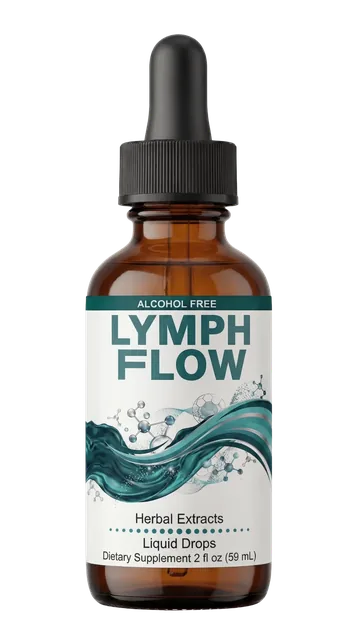
A mark printed on a label is a claim the product makes about itself, and it travels with the bottle: still there in a cupboard six months later, and still there if the website disappears.
A mark printed in a sales asset is a claim the seller makes while selling. It is visible for as long as a buyer is on the page and not afterwards, and on this product it is a claim made with a file that three other brands are also using.
The distinction explains why this page counts the marks rather than displaying them as reassurance.
Three marks that cannot be checked
Three of the eight published marks are claims about what is not in the bottle, and on this product there is no document against which any of them can be read. Not published. No Other Ingredients line was supplied, and no carrier, solvent, preservative or sweetener is named anywhere — on a liquid.
- Vegetarian. Cannot be checked. No Other Ingredients line was supplied, so there is no list of excipients to check it against.
- Dairy free. Cannot be checked, for the same reason. No allergen statement is printed either.
- Naturally gluten free. Plausible from the six names given. The FDA sets a 20 ppm threshold for a gluten-free claim; no testing statement was supplied.
- 100 per cent natural ingredients. ‘Natural’ has no agreed definition in US supplement labelling. Quercetin phytosome is a manufactured complex rather than a plant part, so the mark is doing less work than it looks.
That last row is worth dwelling on. Quercetin phytosome is a compound complexed with a phospholipid to change how it is absorbed — a manufactured preparation, named as such in the marketing. Calling the formula 100 per cent natural while naming a phytosome in it is not quite a contradiction, since natural means nothing in particular here. It is an illustration of how little work the word does.
What real testing would look like
This page is called testing and quality, so it should be clear about what testing would actually consist of on a product like this one, and what would have to exist first.
- A declaration to test against. A Supplement Facts panel naming the six ingredients and their amounts. Without it there is nothing for a laboratory to confirm or contradict.
- An identity test for each botanical, confirming that the material in the bottle is the species named — which on this product would first require a species to be named.
- A standardisation assay where one is claimed. None is claimed here: no marker compound, no percentage and no ratio appears for any of the six.
- Contaminant testing — heavy metals, microbiological limits — which is the part a Certificate of Analysis most often covers, and the one part that does not depend on a panel.
- A dated document naming the batch, released to anyone who asks. What exists here is a reference, LYM-1909-26-LY, and not the document.
Only the fourth of those five is possible on the material as published: a certificate could arrive tomorrow and would still leave the central question open, because there is no panel for it to confirm. The batch page sets out why the panel is the first request and the certificate the fifth.
Questions about the marks
Is the product third-party tested?
Nothing supplied says so. A certificate reference exists but the document was not supplied, and no laboratory is named anywhere.
Does the GMP mark mean the product was tested?
No. GMP is a process standard about how a facility operates — written procedures, cleaning, training, batch records. It is about the factory, not about what is in the bottle, and no certifying body is named.
Does “FDA registered facility” mean FDA approval?
No. A facility registration is an administrative listing. The FDA does not approve dietary supplements before they are marketed, and no registration number was supplied.
Are the badges fake?
That is not the finding. They are stock images used across four unrelated brands, none of which names a certifying body or a number. The claim they carry is unsubstantiated rather than forged.
Why not show all ten?
Because one is misprinted so badly it cannot state its own claim, and one asserts a doctor who is not named. Reproducing either as a trust signal would pass on a claim this desk cannot stand behind.
Ask for the panel, and ask about the horse chestnut
A 2 fl oz bottle of liquid drops, two droppers a day, and no Supplement Facts panel on anything supplied with it. The only quantity that exists — 600 mg of blend a serving — is printed in a marketing graphic. No price was supplied either; the live figure and the 60-day return terms are on the seller’s checkout screen.
60-day window · Questions first? Call +1 (302) 200-3480