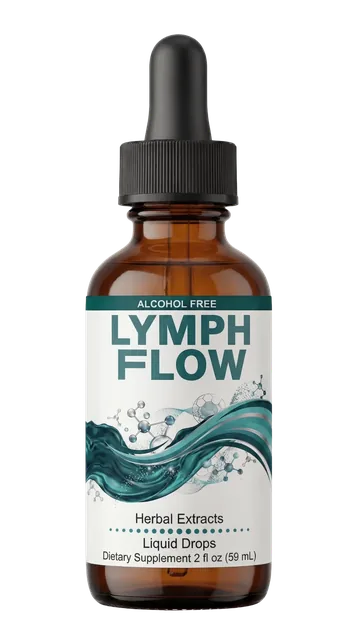
Twelve findings are checked here before you buy Lymph Flow, ordered by how much they should change a decision. The first is that there is no Supplement Facts panel, and the most important concerns the horse chestnut.
Each is checked against a source linked from the label page. They are ordered by how much they should change a decision, not by how bad they look — and two of them credit this product for things most in its category do worse.
01There is no Supplement Facts panel. Two of the FDA’s five required statements are supplied in full.
The FDA’s labeling guide lists five statements a dietary supplement label must carry: the statement of identity, the net quantity of contents, the nutrition labeling, the ingredient list, and the name and place of business of the manufacturer, packer or distributor. This product supplies the first two clearly — LYMPH FLOW, Dietary Supplement, 2 fl oz (59 mL). It supplies no nutrition labeling at all. It names six ingredients but only in marketing artwork, with no amounts, no plant parts and no Other Ingredients line. And it names no manufacturer, packer or distributor anywhere.
02The only quantity that exists is one sentence in a marketing graphic.
“Each 2-dropper serving delivers 600 mg of our proprietary blend”, from the graphic headed How Lymph Flow Works. That is the whole of the quantitative disclosure for this product. It is not on the bottle, it is not on a panel, and the sentence it appears in is cut off mid-clause. Six ingredients share that 600 mg and not one of them carries a figure.
03Because there is no panel, even the usual ceilings cannot be relied on.
On every other product this desk covers, a proprietary blend still yields information: the FDA requires the ingredients “in descending order of predominance by weight”, so the item in position n cannot exceed the total divided by n. That rule governs the Supplement Facts panel. This product has no panel, so the order the six names appear in — boswellia, curcumin, horse chestnut, gotu kola, quercetin, ginger — is a marketing sequence with no regulatory weight behind it. If it is the weight order, the ceilings are 600, 300, 200, 150, 120 and 100 mg. This site prints them and labels every one of them conditional.
04Even the most generous reading puts the largest ingredient below the studied dose.
Boswellia is listed first, so on the conditional reading above it is capped at 600 mg — and that is the ceiling for the whole blend, meaning the other five would be zero. NCCIH records that “Boswellia serrata extract in doses up to 1,000 mg daily has been safely used in several clinical trials lasting up to 6 months”. So the best case for the best-placed ingredient is below the studied range, and every ingredient below it is further below. NCCIH’s own summary is that “there is not enough high-quality evidence to determine whether boswellia is useful for any health condition”.
05“Horse Chestnut” names no plant part, no extract and no standardisation — and that is the distinction that decides its safety.
This is the finding on this product that matters most. NCCIH states plainly: “The raw seeds, bark, flowers, and leaves of horse chestnut are unsafe when used orally because they contain a toxic component.” It then states what is different about the processed material: “Standardized horse chestnut seed extracts, from which this component has been removed, are likely safe for short-term use and have been used safely in research studies for up to 12 weeks.” The entire difference between the unsafe form and the likely-safe one is the words standardised, seed and extract. This product prints “Horse Chestnut” and nothing else. That is not evidence that the product contains the unsafe form — it is that the one distinction NCCIH draws cannot be checked from anything published here.
06“Two droppers” is not a measurement, so neither the dose volume nor how long a bottle lasts can be worked out.
The directions read: “Shake well. Mix one serving (2 droppers) into a glass of water or juice once daily, or as directed by your healthcare professional.” A dropper is a piece of glass, not a unit. How much a pipette delivers depends on its length, its bore and how hard the bulb is squeezed, and the label does not state a volume in millilitres. Across the plausible range — roughly 0.6 mL to 1.0 mL a squeeze — a two-dropper serving is somewhere between 1.2 and 2.0 mL, which makes a 59 mL bottle last anywhere from 30 to 49 days. The 60-day money-back window runs from purchase, so that spread decides whether a bottle finishes inside it.
07The same arithmetic implies a concentration between about 300 and 500 milligrams per millilitre.
If a serving is 600 mg of blend in somewhere between 1.2 and 2.0 mL of liquid, the bottle carries roughly 300 to 500 mg of blend in every millilitre — that is, between about 30% and 50% by weight per volume. That is a high loading for any liquid. It is worth knowing alongside two other supplied facts: the bottle is labelled ALCOHOL FREE, and NCCIH describes boswellia as “an herbal extract made from the gum resin or bark of the tree”. Gum resins are poorly soluble in water, which is the usual reason such preparations are made with ethanol. The directions begin “Shake well”, which on a liquid normally means the contents settle. Nothing supplied names the carrier, the solvent or any excipient, so none of this can be resolved — it is a question for the order desk.
08Two of the six ingredients have no monograph at the bodies this desk reads.
Gotu kola and quercetin return no fact sheet at NCCIH’s Herbs at a Glance index or at the NIH Office of Dietary Supplements under the names printed. The only NIH hits are entries in the Dietary Supplement Label Database — photographs of other products’ labels, which record what is sold rather than what is known. That is a statement about available information, not a verdict: nothing can be said about either ingredient here, in either direction. The other four — boswellia, curcumin, horse chestnut and ginger — do have monographs, which is a better hit rate than most products this desk covers.
09None of the six has a lymphatic monograph, and lymphoedema is a condition with real management.
The product is sold to “support your body’s natural lymphatic drainage and circulation”. Searching the four ingredients that do have monographs returns files on osteoarthritis, inflammation, nausea, menstrual cramps and chronic venous insufficiency — nothing on the lymphatic system. The closest any ingredient comes is horse chestnut, which NCCIH says is “promoted for chronic venous insufficiency” and for which “a 2012 systematic review of 17 studies suggested that horse chestnut seed extract can improve symptoms of CVI” — a venous condition, not a lymphatic one, and again the seed extract. Meanwhile the National Cancer Institute records that lymphoedema “is a chronic condition that cannot be cured but can be treated”, with compression, manual lymphatic drainage performed by a therapist, exercise and skin care, and advises: “Contact your doctor as soon as you notice heaviness, swelling, or other signs of lymphedema.”
10Every mark supplied with this product is a pixel-for-pixel match for a file supplied with three other brands.
Ten marks came with this product. This desk compared each against the asset folders of every other product in the same batch by downsampling both to 64×64 pixels and measuring the mean absolute difference per channel. A difference of zero means the files are the same image. Ten of ten matched Lungora, a lung supplement. Ten matched Slim Metrix, a weight-loss supplement. Nine matched Zencortex, an ear-health supplement. The payment-card strip matched too. Among them is a “made in USA” roundel whose ring reads “MANUFACTURE IN” at the top and “MANUFACTURE IN” again at the bottom — a sentence that is ungrammatical, duplicated and never finished. The same misprint appears on all four brands. Neither that roundel nor the “Doctor Formulated” mark, which names no doctor, is published on this site.
11Six generated portraits, a physician badge naming no physician, and a pack that calls its own reviews layout copy.
The asset folder contains six photographs captioned as customers: a young man, a young woman, a middle-aged woman, an older woman, a Latina woman and a middle-aged man. They are synthetic images of people who do not exist, and none appears on this site. A “Doctor Formulated” badge was supplied naming no doctor, no credential and no registration number; it is the same file supplied with three other brands. The pack also supplied 4.4 out of 5, 1,278 written reviews, 8,787 orders and 91% recommending — and then stated in its own closing block that “reviews, star scores, and order counts in this pack are layout copy only”. This site publishes no rating, no review count and no testimonials.
12Three of the four captions in the marketing graphic are cut off mid-sentence, and the order desk is shared with another brand.
The graphic headed How Lymph Flow Works has four numbered steps. Step 1 ends “or as directed by”. Step 2 ends “a careful mix of ancient herbs and”. Step 4 ends “speaking to your healthcare professional before”. Only step 3 finishes. The document that carries this product’s only quantity cannot finish three of its own four sentences. Separately, the order line +1 (302) 200-3480 is the same number supplied with an unrelated chewable oral-health product in an earlier batch, and both packs describe it in the same words as a “BuyGoods default order desk” — a payment processor’s desk rather than either brand’s.